
Armstrong County Arrest to Court Records
An Armstrong County jail arrest creates at least two tracks. The jail track answers where the person is held, whether bond has been set, and whether a hold blocks release. The court track answers what charge the prosecutor files, which court receives the case, what hearings are scheduled, and how the case ends. A booking charge may be based on an arrest report or warrant, while a court charge may be filed, changed, reduced, dismissed, or later replaced by an indictment.
The practical flow is: arrest by Armstrong County or another agency, booking or housing through Carson County Jail if detention is needed, magistrate warning under article 15.17, prosecutor review, case filing, clerk indexing, and court activity. Misdemeanor matters may use county-level channels and the Armstrong County Attorney. Felony matters use district-court channels and the 47th Judicial District Attorney serving Armstrong County.
For custody and booking status, use the Armstrong County inmate records process. For filed charges, docket events, dispositions, and certified copies, use the court and clerk path.
This timing explains why a court search may be empty right after an arrest. The person may still be in intake, waiting for a magistrate, or waiting for the prosecutor to accept and file a charge. A jail record can exist before a court case is indexed. The reverse can also happen later: a court case may remain visible after the person has bonded out, served a short sentence, or moved to another custody system.
Search Armstrong County Court Records
re:SearchTX is the statewide court-record search channel identified in the research. It may show cases where available, but it is not a replacement for the Armstrong County Clerk or District Clerk when a file is older, sealed, not online, or needs certification. Access may require registration or login for fuller details, and public viewing can vary by court and record type.
| Field Label | Type | Required | Notes |
|---|---|---|---|
| Search by person, business, or case | Text | Optional | Use party name or case information where available. |
| Case number | Text | Optional | Best when a cause number is known. |
| Court / location filters | Dropdown or filter | Optional | Filter to Texas courts and available county data. |
| Date filters | Date or filter | Optional | Can narrow filing or event dates. |
| Login / register | Account workflow | May be required | More detail can require registration or a fee depending on record. |
The re:SearchTX interface is the online starting point for many Texas court-record searches.
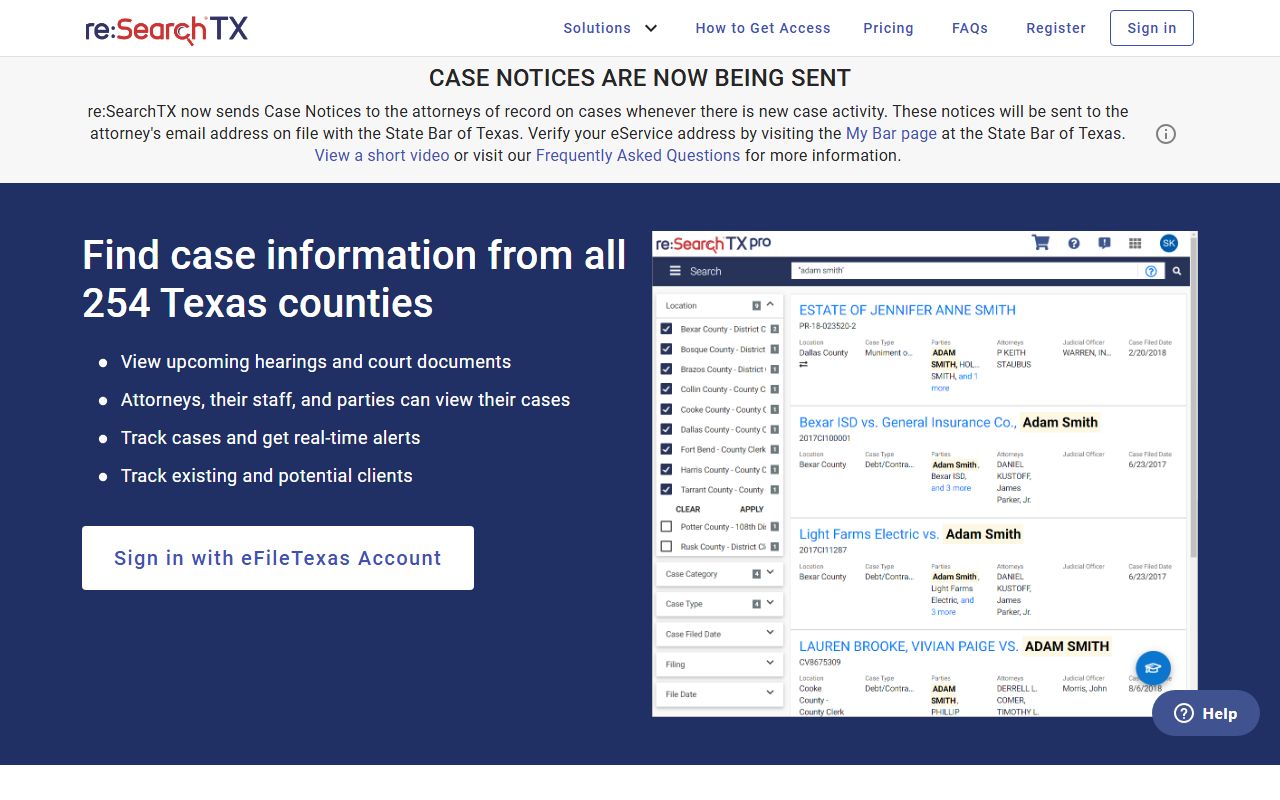
Use the portal first, then contact the proper Armstrong clerk if the case is not visible or a certified copy is needed.
Armstrong County Clerk Case Channels
Armstrong County's court-record path depends on case type. The Armstrong District Clerk is the local channel for district-court criminal files, which usually means felony matters. County-level criminal matters may involve the Armstrong County Clerk and county court. The research also identifies the 47th Judicial District Attorney for felony prosecution context and the Armstrong County Attorney for local misdemeanor prosecution, but prosecutors are not public case-record counters.
The Armstrong District Clerk page is a local source for district criminal case access after a felony arrest.

When a cause number is known, provide it to the clerk. It is much more precise than a name-only search.
Armstrong County Charging Records
The court record after an arrest is shaped by the charging document. A jail charge can be an initial arrest label, but the prosecutor decides what to file. Texas cases may involve a complaint, information, indictment, amended charge, dismissal, deferred adjudication, or conviction. A person should not be described as convicted just because a booking record lists a charge.
| Document | Used For | What It Shows |
|---|---|---|
| Complaint | Initial accusation or sworn charging document | Alleged offense facts and legal basis for prosecution. |
| Information | Prosecutor-filed charge, often in misdemeanor practice and some felony stages | The charge the state chooses to pursue without a grand-jury indictment. |
| Indictment | Grand-jury felony charging document | Formal felony accusation returned by a grand jury. |
Armstrong County Charge Status
A court-record search should separate charge status from custody status. A person can be released while charges remain pending, jailed on a different hold while one case is dismissed, or convicted after a plea or trial. The court record, not the jail roster, is the source for disposition.
| Status | Plain Meaning | Why It Matters |
|---|---|---|
| Pending | The case or charge remains open. | Future hearings, bond conditions, or plea settings may exist. |
| Dismissed | The charge ended without conviction. | Booking records may still exist unless expunction or sealing applies. |
| Deferred adjudication | Texas disposition where guilt may not be finally adjudicated if terms are completed. | It is not the same as a simple dismissal. |
| Conviction | Final finding or adjudication of guilt. | DPS conviction search is better for this than live jail status. |
| Warrant or hold | A court or agency seeks custody or release notice. | It can stop release even if bond is paid in another case. |
Charge vs Conviction Records
Texas DPS Crime Records Service offers a public conviction name search, but that channel is not a live jail roster and is not a complete pending-charge lookup. It is better for conviction-history research than for finding what happened right after an Armstrong County arrest. Use the DPS search only after understanding that court records, jail records, and conviction records can show different stages of the same matter.
| Record Type | Source | What It Should Not Be Used For |
|---|---|---|
| Jail charge | Booking or jail record | Calling someone convicted. |
| Filed court charge | Clerk or re:SearchTX | Current custody location. |
| Conviction | Final court disposition or DPS conviction search | Assuming all arrests led to guilt. |
The Texas DPS public conviction name search is a statewide conviction-history channel, not an Armstrong County booking lookup.
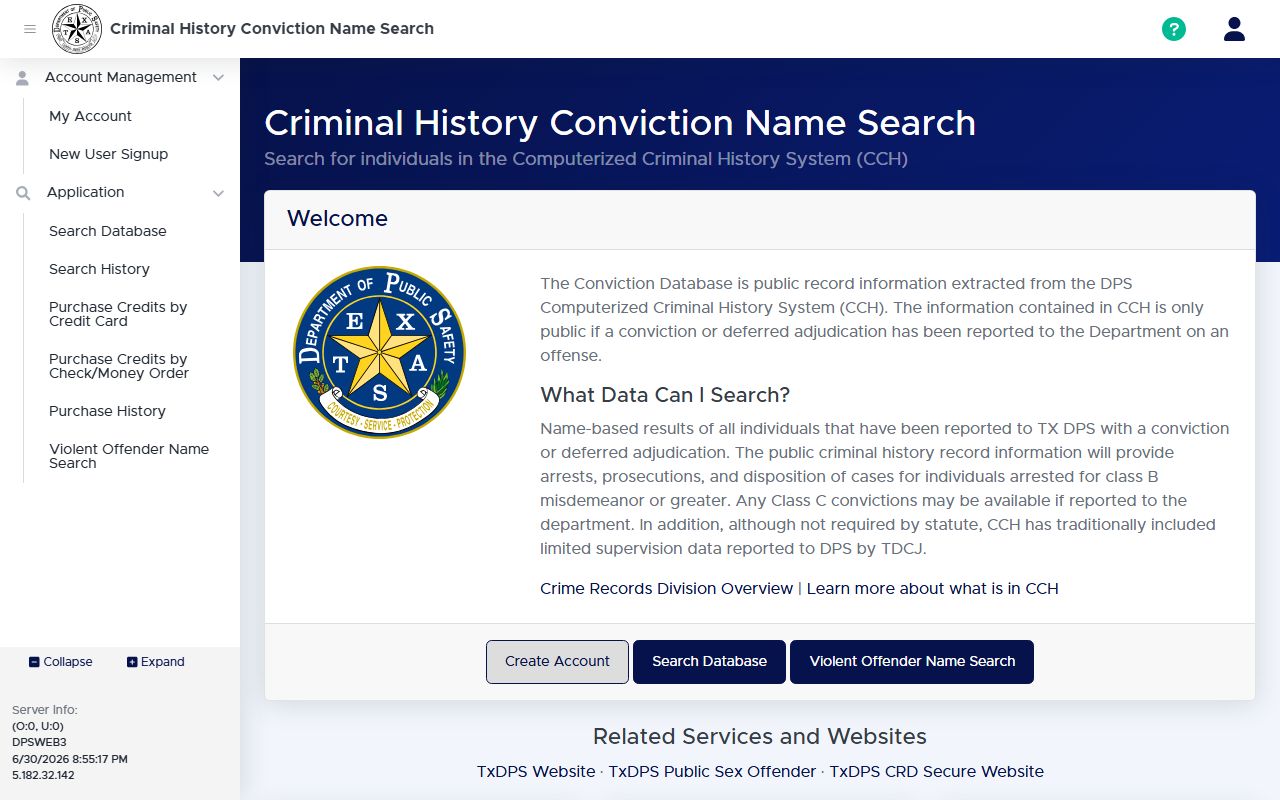
For pending charges after a jail arrest, court and clerk records remain the more direct source.
Armstrong County Bond and Warrants
Bond decisions connect jail and court records. Article 15.17 requires the early magistrate process, while article 17.15 sets rules courts use when fixing bail. A bond can be cash, surety, personal recognizance, property if allowed, or unavailable because of a no-bond hold, parole hold, family-violence condition, other-county warrant, federal hold, or immigration detainer. Carson County Jail can address current custody and release timing, but the court controls many bond and warrant decisions.
No official Armstrong public warrant-search database was located. Warrants can arise from a magistrate, county court, district court, another county, another state, or federal court. Search re:SearchTX for filed cases, contact the relevant Armstrong clerk if a cause number exists, and call the sheriff for local warrant direction. A warrant should not be treated as cleared until the issuing court or agency confirms it.
Sealed and Expunged Records
Texas Code of Criminal Procedure Chapter 55 governs expunction of qualifying criminal records. Expunction is a court process and should not be confused with a jail release, case dismissal, or website removal request. Sealing and expunction questions are legal questions, and a court order may be needed before agencies change public access to a record. Booking photos raise an extra issue because Texas Government Code 552.1085 restricts many inmate photographs even before expunction is considered.
| Term | Meaning | Where to Check |
|---|---|---|
| Sealed | Public access is limited by court order or law. | Clerk and court order. |
| Expunged | Qualifying record is removed from public access under Chapter 55 procedures. | Court order and affected agencies. |
| Dismissed | Charge ended without conviction. | Case docket or clerk record. |
Note: A dismissal alone does not erase every jail, sheriff, or court record.
Where Armstrong County Records Live
The main divide is simple. Carson County Jail and VINELink are for custody status. Armstrong sheriff records are for local arrest, offense, and public-information requests. Armstrong clerks and re:SearchTX are for filed case records. DPS conviction search is for conviction history. TDCJ, BOP, and ICE locators are for custody after transfer or when the custody basis is not local jail detention. Booking photos are addressed separately because Texas law restricts their release; the Armstrong County jail mugshots page explains that issue.
A careful search uses identifiers from one system to improve the next one. A booking date helps the sheriff locate an arrest record. A cause number helps the clerk locate a case. A TDCJ number or SID number helps state corrections locate a sentenced prisoner. An A-number helps ICE locate an immigration detainee. Name-only searches can work, but they are weaker when names are common or spellings vary.
- Cause number
- The court filing number used to identify a case.
- Capias
- A Texas court writ or order for arrest, often tied to a case.
- Disposition
- The court outcome, such as dismissal, conviction, acquittal, or deferred adjudication.
- Detainer
- A notice from another agency that it wants custody or release notice.